
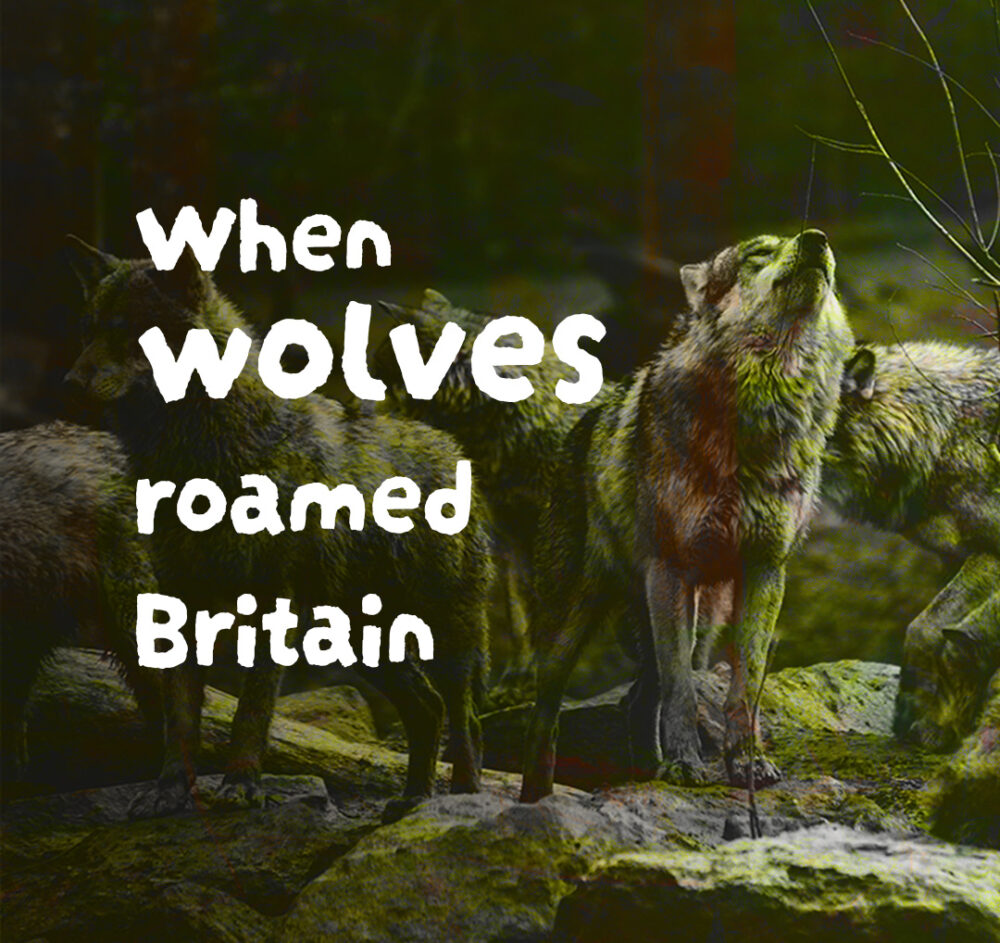
Wolves were not always creatures of legend in Great Britain.
Once upon a time they were simply a part of our wild landscape. They arrived after the last ice age, over 10,000 years ago. For thousands of years they shaped the ecosystem, influencing prey populations and contributing to the balance of the natural world.
Archaeological digs have found their remains throughout the countryside, including the complete skeleton of the Helsfell wolf1 from the 12th century. You can still see the remains at Kendal Museum today.
Such remains are a quiet reminder that these apex predators once thrived alongside us.
A Story That Led Me Home
Sometimes we don’t truly understand what we are learning until much later. That is exactly what happened when I began exploring the wolf’s history in Great Britain. To my surprise, it led me straight back to stories I had grown up with as a child. The treasures of Sutton Hoo and the great Wuffing people.
You might wonder what that has to do with wolves. Well, it may or may not surprise you to learn that wolves were not seen purely as threats. For some, they carried symbolic meaning and power.
You can see it in the names of ancient tribes. The East Anglian King, King Wuffa, whose name likely meant Wolf, led a people known as the Wuffings. The wolf people. Historians believe they originated in Scandinavia, but their story is etched into one of the most remarkable archaeological sites in Britain. At Sutton Hoo, a purse decorated with gold and garnets carries intricate animal imagery thought to be of wolves and humans interacting.
I still remember visiting Sutton Hoo. 2 as a young teenager, standing in awe of everything that had been uncovered from the earth. If you have never been, I highly recommend it. When I visited, it had good accessibility too, including the hire of an all terrain buggy for those who need it.
When Fear Took Hold
When the Anglo-saxons began settling in Britain from around the 5th century AD, they bought many skills with them. Amongst the most transformative was their approach to agriculture. The land began to change. Farming spread, permanent settlements grew, and the nomadic way of life that had moved with the seasons gradually disappeared.
And with that change came another. The way people saw wildlife, and wolves in particular, began to shift.
They were no longer admired or respected. Something that had once been in balance tipped. Their place in the ecosystem was misunderstood. Where once they had been an asset, a key to the natural world’s equilibrium, they became an inconvenience. A threat to livestock. Something to be removed.
Rulers saw the opportunity.
They employed professional wolf hunters and offered rewards for their killing. They destroyed forests. They rewarded those who cleared land of wolves with land itself. A transaction that cost the wolf everything.
Without the forests there was no home left to return to. The land that had sustained them for thousands of years was disappearing beneath their paws.
Medieval rulers, including Edward I, supported efforts to eliminate wolves.
The last wolf in England is thought to have been killed in the 15th century. In Scotland, possibly into the 17th century. A slow, deliberate erasure.
The balance was lost
Removing this apex predator changed Britain’s ecosystem in ways that are still felt today.
Wolves are a keystone species, meaning they can have a strong influence on ecosystems through their interactions with other species. Scientists call them ecological sentinels. Their health reflects whether the whole ecosystem is thriving. Pull the thread and everything unravels.
Without a natural predator to maintain herbivore populations, deer numbers rose. Overgrazing followed. Our forests and countryside were significantly affected. Today, deer populations are influenced by land use as well as the absence of predators, and are managed through controlled culling. A human solution to a human-made problem.
The story of Britain’s wolves reminds us why protecting wildlife matters. Why looking beyond our immediate needs is so important. If we are too short-sighted, more animals will disappear. And with them, the very countryside we love.
We cannot just hit undo.
Reflection
Does this story sound familiar?
Cast your mind across the world and you will find this pattern repeated.
Can you think of any examples?
Remember, your voice matters. You can choose to shout Stop! No More!
Footnotes
- The complete skeleton can be seen at Kendall Museum.
https://kendalmuseum.org.uk/object-of-the-week-helsfell-wolf/ ↩︎ - The famous ship burial at Sutton Hoo has strong links to King Wuffa and his people the Wuffingas, as well as his son who later became king Raedwald. If you haven’t yet had the opportunity to visit Sutton Hoo I would highly recommend going. When we visited around 2012 accessibility was great – we were able to hire an all-terrain scooter/buggy for my mum to use to explore the outer areas.
https://www.nationaltrust.org.uk/visit/suffolk/sutton-hoo
↩︎