
Why so rare?
A mysterious cat
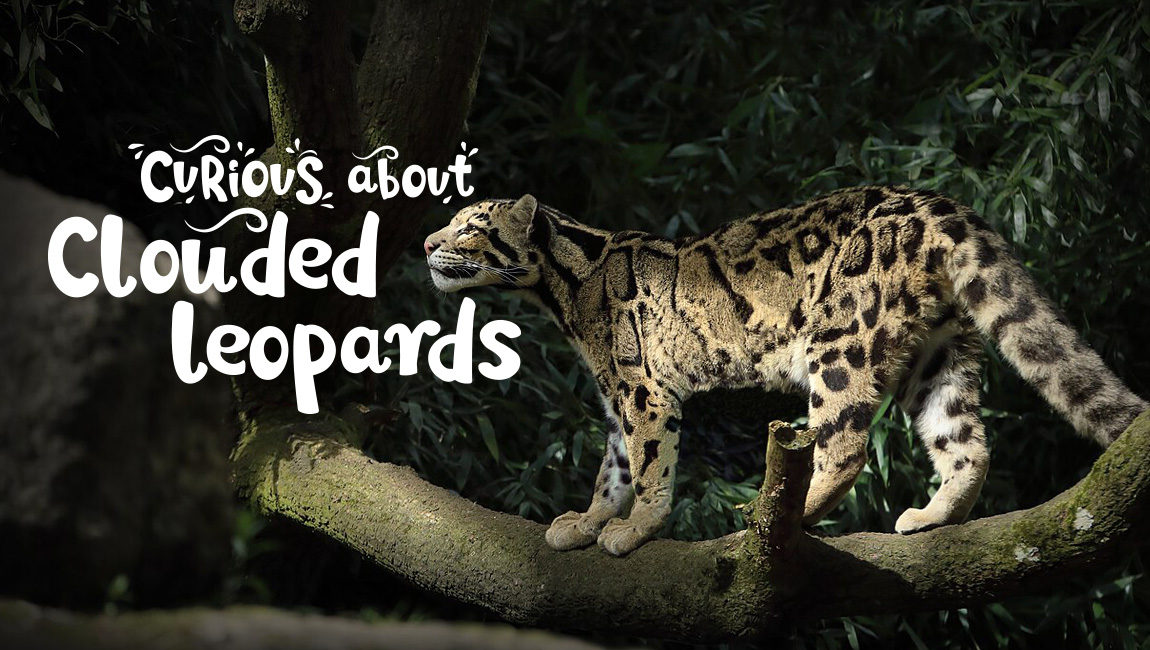
The clouded leopard is one of the most mysterious wild cats on the planet. They spend almost their entire life high up in the forest canopy, moving through the trees mostly at night. Clouded leopards are so secretive that researchers can spend years searching without ever spotting one in their natural habitat.
For a long time, scientists thought there was just one species of clouded leopard. But in 2006, genetic research made a surprising discovery. There are actually two! The mainland clouded leopard and the Sunda clouded leopard. They look very similar but are as different from each other as lions are from tigers.
4-5 times larger than a domestic cat
| Animal group | Mammal · Felidae (Cat family) |
| Diet | Carnivore — Macaques, Gibbons, Pigs, Deer, Birds, Squirrels |
| Body length | Body 2-3 feet (approx 60-92cm) Tail 3 feet (approx 92cm) cm |
| Weight | Males up to 50lb (over 20kg) Females up to 30lb (over 13.5kg) |
| Lifespan | 11 years in the wild |
| Location | Mainland Asia, 2,800m Islands of Sumatra + Borneo, 500-1,000m |
| Habitat | Evergreen tropical forests |
| Population | Up to 10,000 across 2 species |
Why so rare?
A mysterious cat
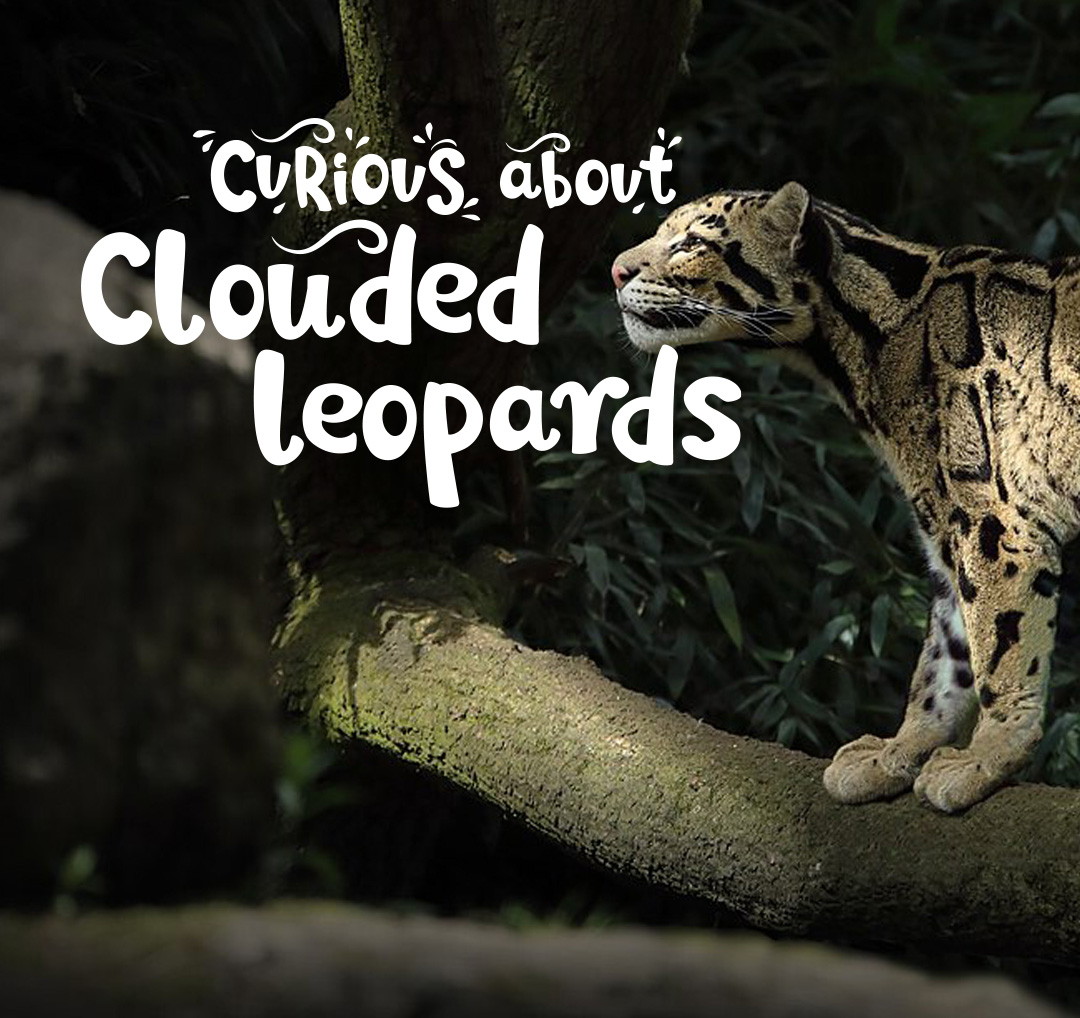
The clouded leopard is one of the most mysterious wild cats on the planet. They spend almost their entire life high up in the forest canopy, moving through the trees mostly at night. Clouded leopards are so secretive that researchers can spend years searching without ever spotting one in their natural habitat.
For a long time, scientists thought there was just one species of clouded leopard. But in 2006, genetic research made a surprising discovery. There are actually two! The mainland clouded leopard and the Sunda clouded leopard. They look very similar but are as different from each other as lions are from tigers.
| Animal group | Mammal · Felidae (Cat family) |
| Diet | Carnivore — Macaques, Gibbons, Pigs, Deer, Birds, Squirrels |
| Body length | Body 2-3 feet (approx 60-92cm) Tail 3 feet (approx 92cm) cm |
| Weight | Males up to 50lb (over 20kg) Females up to 30lb (over 13.5kg) |
| Lifespan | 11 years in the wild |
| Location | Mainland Asia · Islands of Sumatra + Borneo. |
| Habitat | Evergreen tropical forests |
| Population | Up to 10,000 across 2 species |
Population + Habitat
Difficult to count
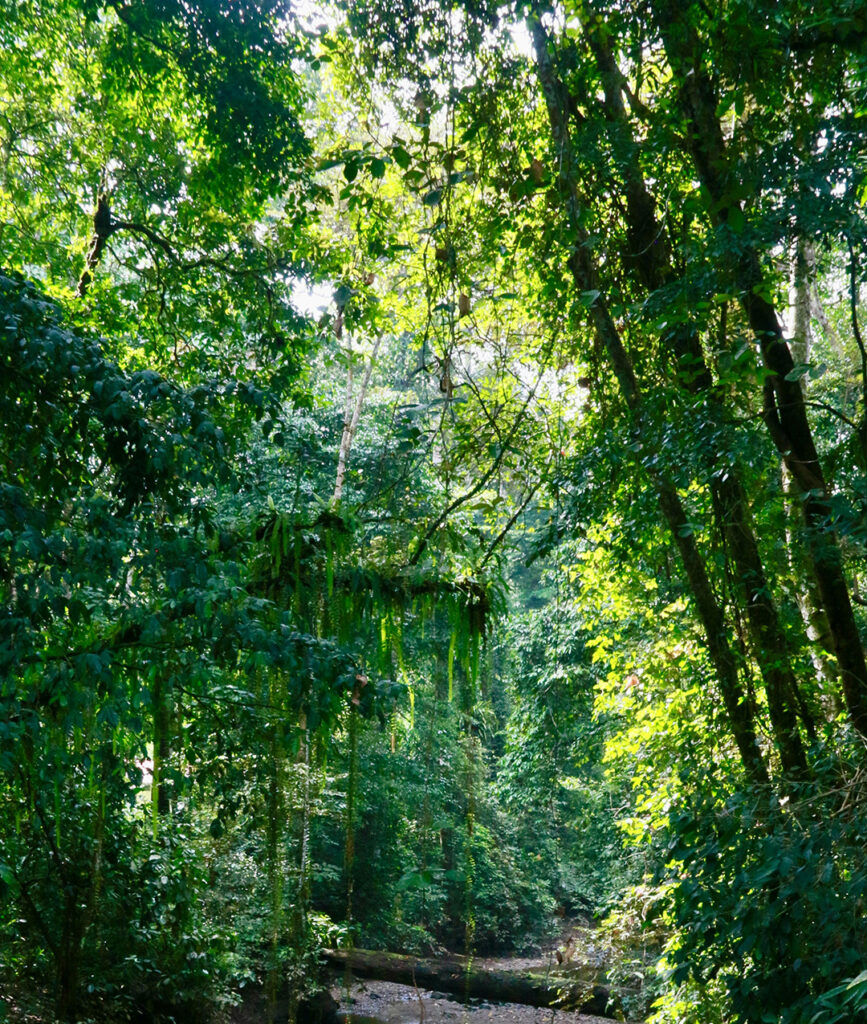
Clouded leopards live in the tropical rainforests of Southeast Asia. It is very difficult to know exactly how many are left in the wild, but estimates suggest fewer than 10,000 remain across both species.
There was once a third population living on the island of Taiwan, but no sightings have been recorded since 1989. This population is now considered extinct.
Animal Adaptations
Built to climb
Steve backshall meets dok mai, the clouded leopard cub
The clouded leopard might just be the best tree climber of any cat. They can:
Hang from a branch by their back feet alone
Run down a trunk headfirst like a squirrel
Move along the underside of branches upside-down.
Every part of its body has been shaped by millions of years in the canopy.
180° rotating rear ankles
Modern sabre-tooth
When you compare the length of their canines to the size of their skull, clouded leopards have the longest canine teeth of any living cat.
Tail as long as their body
Their tails act like a counterbalance, a bit like a tightrope walkers pole when moving along thin branches.
Short sturdy legs + huge paws
Their body shape helps keep their centre of gravity low. Soft grippy paw pads stick to bark like climbing shoes.
Alone in the canopy
A mother's job
Clouded leopards live almost entirely alone. Most of what we know about family life comes from capitve animals. In the wild they are so elusive that scientists are still piecing the puzzle together.
Solitary by nature
Males and females only come together to mate. Outside of that, each animal keeps entirely to its own territory.
Mum raises cubs
Up to 5 cubs are born in a litter.
Blind and helpless, mothers nurse them for the first 3-4 months.
Growing up fast
A cub’s eyes open at around 10 days old. By 10 weeks they are moving around and at 10 months, they’re independent.
Territory marking
Each clouded leopard marks their territory using scent marks and claw scratches. Their ranges often overlap.
Vocalisations
Not quite a roar
Clouded leopards do not have the physical adaptations to roar.
Unlike most small cats they do not purr continuously either.
Instead they have their own distinct set of sounds.
One of the few wild cats known to genuinely meow
A soft snuffling sound made by bonded pairs or mother + cubs.
ID SKILLS
Not a leopard...
Despite the name, the clouded leopard belongs to its own completely separate genus Neofelis. It’s not closely related to the African leopard at all. Spot the difference in their markings:
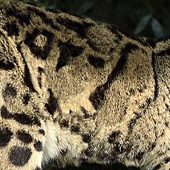
Clouded Leopard
Neofelis nebulosa
Large irregular blotches in dusky grey-brown shaped like clouds or ink splashes. Dark edges with a paler centre. Smaller solid spots on the legs, face, and tail.
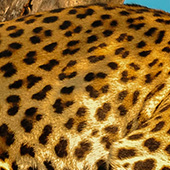
African leopard
Panthera pardus
Tight, evenly spaced rosettes. Small rings of dark spots arranged in a circle around a shaded centre. Solid black spots on the face, chest, and lower legs.
Challenges clouded leopards face
Threats and dangers
Palm oil + logging
Industrial farming has wiped out huge areas of Southeast Asian rainforest.
Avoid buying products that use palm oil.
Poaching
Their skins are highly prized. Their bones are used in traditional medicine. Their cubs are stolen for the illegal pet trade.
Be careful what videos you are liking and sharing.
Accidental entanglement
They often get caught in snare traps set for other animals. This is a significant and under-reported threat.
Ranger patrols and snare removals as well as anti-poaching technology is helping.
Conflict with farmers
They are often blamed for missing livestock even when there is no evidence.
Education programmes with local communities are helping to reduce retaliations.
Research + Conservation efforts
Tracking clouded leopards
Meet researcher Crishu Gomez leading a team to track and tag clouded leopards in Borneo as part of WildCRU’s work.
Useful links
Find out more
I’ve included some interesting articles alongside links to organisations and charities working on the ground to make change and protect clouded leopards.
Page notes
This content reflects the most accurate and up-to-date information available at the time of publication. The author strives to incorporate the latest research findings, but scientific knowledge evolves continuously with new discoveries and publications. Curious Kin accepts no liability for any inaccuracies or changes arising from subsequent studies.
Any videos and resources shared here have been carefully selected with the animals’ welfare at heart, not tourism.
Doc Mai is a clouded leopard cub born as part of a breeding programme at Khao Kheow Zoo in Thailand. This is not currently a breed-to-release programme. As far as I am aware, no breed-to-release programme exists for clouded leopards at this time.
Breeding animals in captivity for conservation and research is a complex subject and one that continues to be debated.