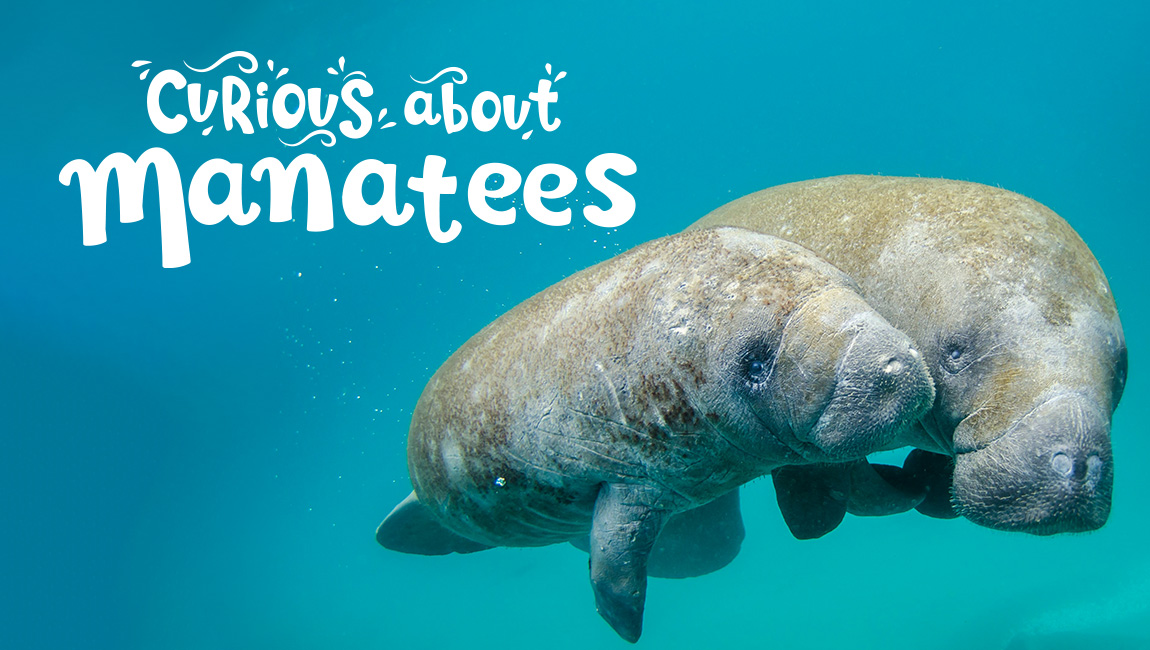
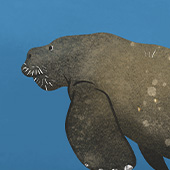
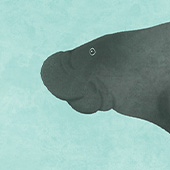
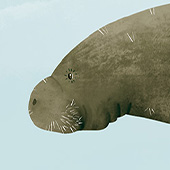
If you go down to the lagoon today you just might meet a manatee, but be careful as these marine mammals are protected by law.
Slow your boat down and don’t approach them.
These gentle, whiskery mermaids spend their days roaming rivers, estuaries, lagoons and shallow coastal waters, grazing on seagrass meadows, munching aquatic plants like water hyacinth and keeping waterways healthy one enormous mouthful at a time.
Sea cows
Care from afar
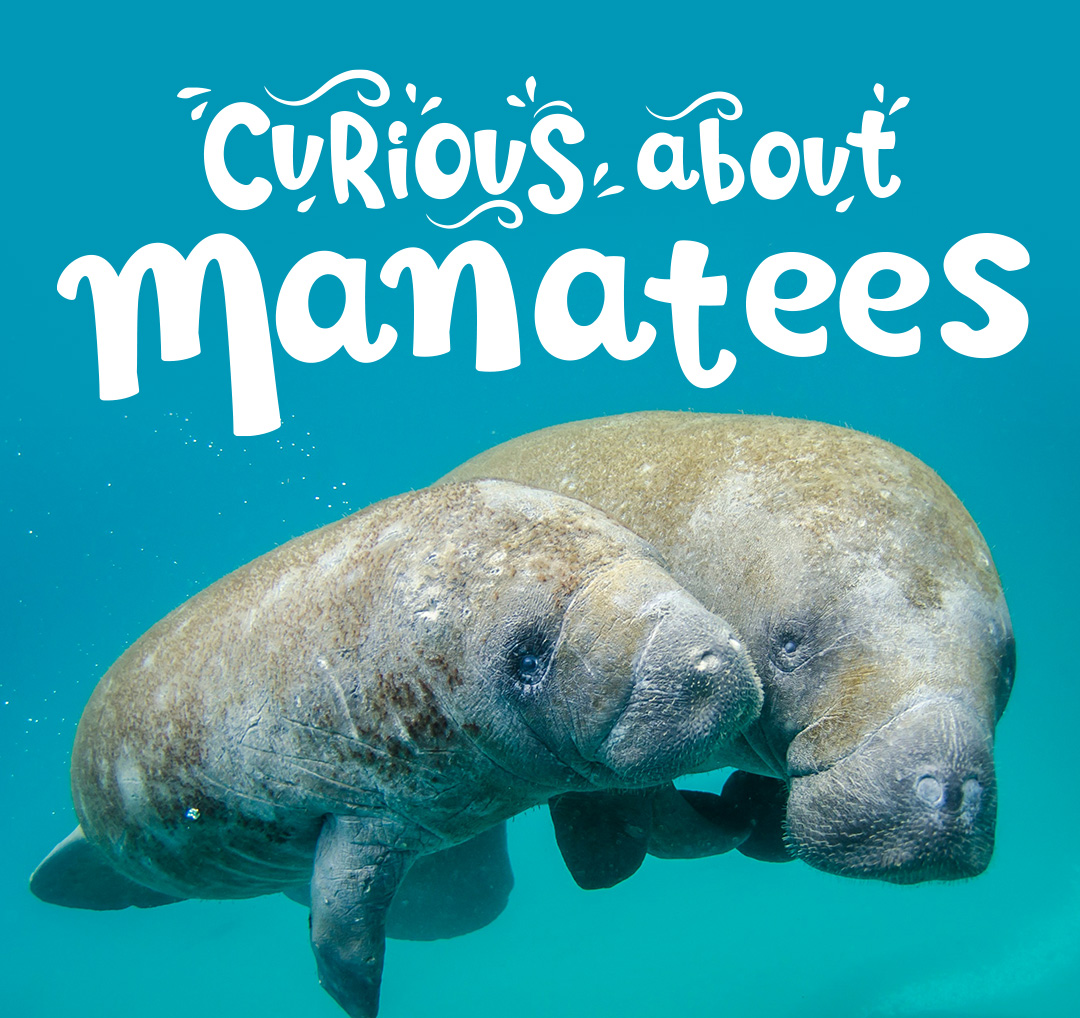
If you go down to the lagoon today you just might meet a manatee, but be careful as these marine mammals are protected by law.
Slow your boat down and don’t approach them.
These gentle, whiskery mermaids spend their days roaming rivers, estuaries, lagoons and shallow coastal waters, grazing on seagrass meadows, munching aquatic plants like water hyacinth and keeping waterways healthy one enormous mouthful at a time.
Order of the sirenia
Sea cows of the world
Manatees belong to the order Sirenia. An ancient and exclusive group of marine mammals. Manatees share this order with one other living species the Dugong.
Hundreds of years ago a sea cow giant roamed our cold waters. The Steller’s sea cow which was hunted to extinction in the 18th century, not long after they were originally discovered.
The three surviving species of manatee are the West Indian, West African and Amazonian. The West Indian is made up of 2 sub species the Florida and Antillean.
Location
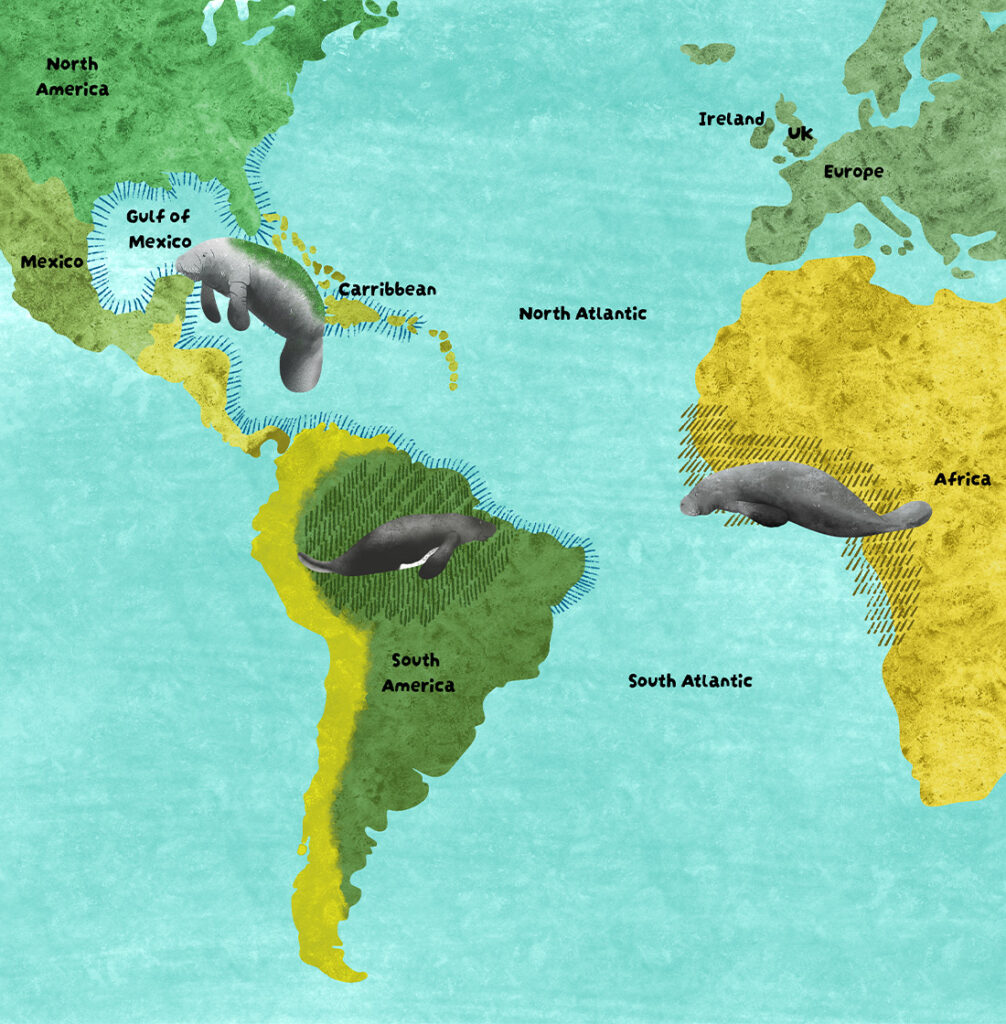
Where in the world?
Follow the warm water.
West Indian Manatee > Florida Subspecies
Found in South East United States of America from Gulf of Mexico to Florida
West Indian Manatee > Antillean Subspecies
Found in Gulf of Mexico through Central America, Caribbean and North East Brazil.
West African manatee
Found along the West Coast of Africa, travelling up river as far as Chad and Niger.
Amazonian Manatee
Found in the Amazon river basin across Brazil, Colombia, Ecuador, Peru.
Dugong
Found along the Indo Pacific ocean ranging from East Africa to Australia, including the Red Sea, Persian Gulf and Southeast Asia.
Fast Facts
You didn't know that they...
Cannot tolerate the cold
Despite their size, they have very little body fat for insulation, so they rely entirely on warm water to regulate their temperature.
Migrate with the seasons
Hugging warm coastlines, pushing deep into river systems and gathering around natural springs or even power plants when temperatures dip.
Remarkable kidneys
All manatees have a special kind of kidney called a ‘reniculate’ kidney. This enables some manatees to move between freshwater and saltwater.
Meet the others
Introducing...
Florida Manatee Trichechus manatus latirostris
The largest of the three species, the West Indian manatee has 2 sub-species the Antillean and Florida manatee.
West Indian Subspecies
Antillean manatee West Indian Subspecies Trichechus manatus manatus
One of 2 subspecies belonging to the West Indian Manatee. The Antillean has the broadest but most fragmented population.
West Indian Subspecies
Amazonian manatee Trichechus inunguis
The smallest of the three species, the Amazonian manatee can only be found in the freshwaters of the Amazon river basin.
West African Manatee Trichechus senegalensis
The West African manatee is slightly smaller than the West Indian. They are known travel up river as far as Chad and Niger.
Vocabulary
Stuck on a word? Have a look below.
Aquatic living or found in water
Ballast weight that helps keep something stable and balanced.
Bouyancy the ability to float or stay at a certain depth in water.
Estuary where a river meets the sea, mixing fresh and salt water.
Lagoon a shallow stretch of water separated from the sea by a sandbank or reef.
Herbivore an animal that only eats plants.
Nictitating lens a transparent eyelid that protects the eye underwater.
Marine mammal a warm-blooded animal that lives in or around the sea and breathes air.
Migrate to travel from one place to another with the seasons.
Prehensile able to grip and hold, like fingers
Seagrass meadow underwater fields of grass-like plants that grow in shallow coastal waters.
Sirenia the scientific order that manatees and dugongs belong to.
Subspecies a smaller group within a species that shares specific characteristics.
Reniculate Kidney instead of one kidney, manatees have kidneys made up of lots of tiny individual kidneys all bundled together, each one doing its own job
Vibrissae are tiny hair sensors that pick up movement and vibrations covering the manatees body and mouth.
Vestigial a leftover body part no longer needed after millions of years of evolution.
Page notes
This content reflects the most accurate and up-to-date information available at the time of publication. The author strives to incorporate the latest research findings, but scientific knowledge evolves continuously with new discoveries and publications. Curious Kin accepts no liability for any inaccuracies or changes arising from subsequent studies.
Any videos and resources shared here have been carefully selected with the animals’ welfare at heart, not tourism.