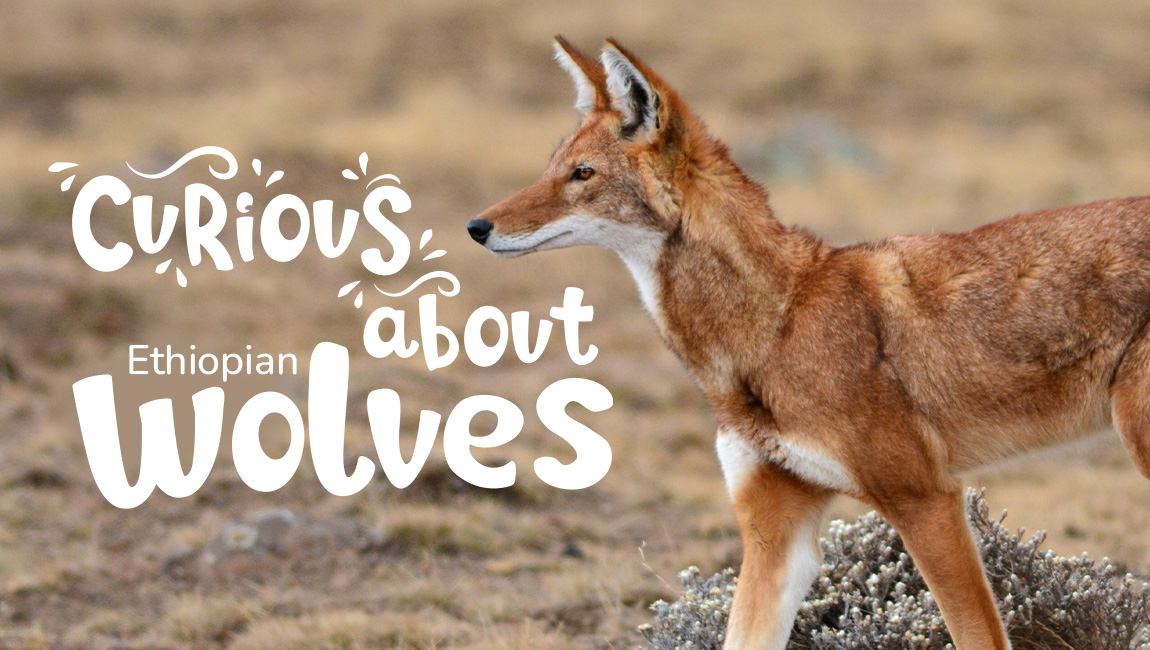
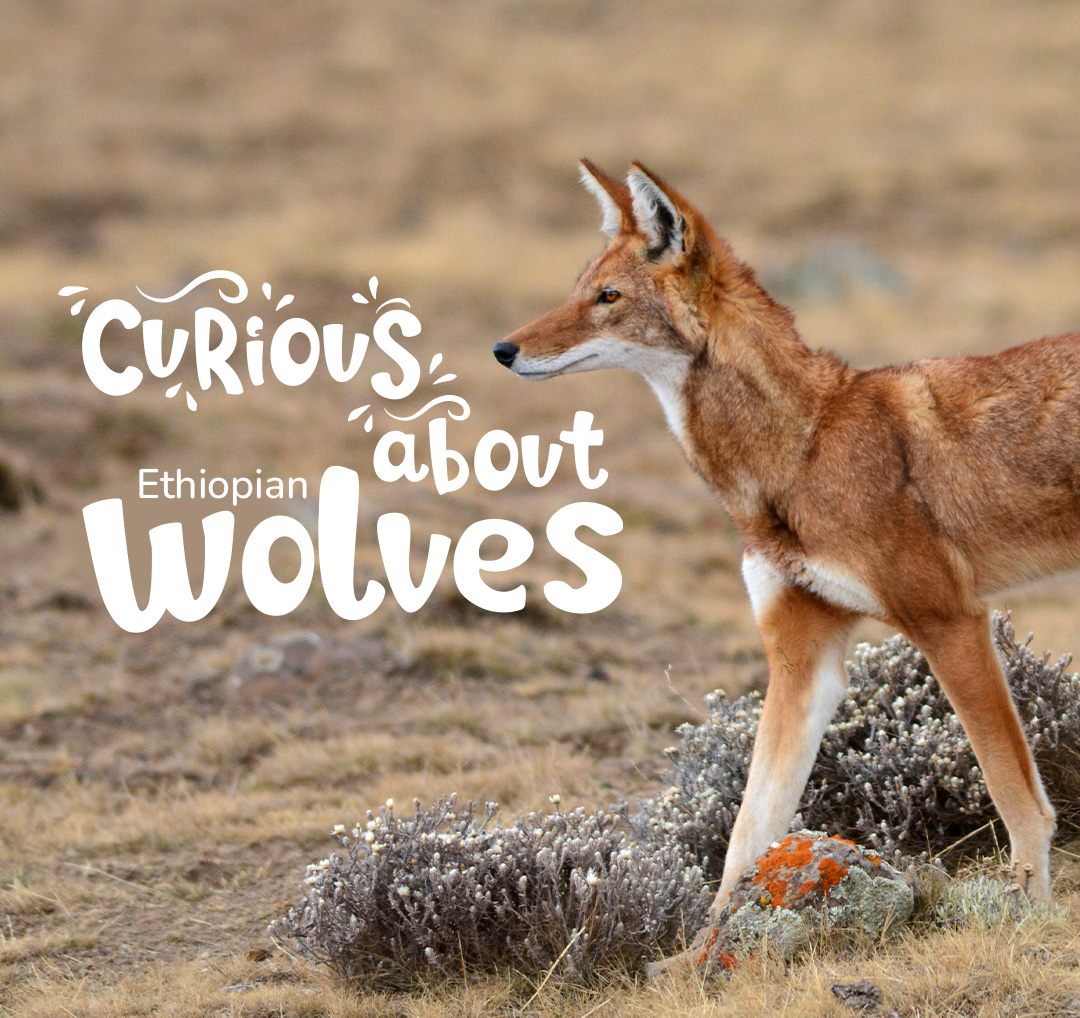
The Ethiopian wolf lives across the Highlands of Ethiopia. The largest population can be found in South Ethiopia’s Bale Mountains. They have a highly specialised diet, which makes them extra vulnerable when their food sources become scarce because their home range shrinks.
Right now there are less than 500 individuals surviving, making them one of the rarest canids in the world.
Africa’s most endangered carnivore
Ethiopian Wolf
Canis Simensis
AKA Abyssinian wolf · Simien fox · Jeedala fordaa
EN · Endangered
Animal group
Mammal · Canid (dog family)
Diet
Carnivore — giant mole-rat, common mole-rat, grass rats
Body length
~1 m · tail ~40 cm
Weight
11–20 kg
Lifespan
8–9 years in the wild
Location
Ethiopian highlands · above 3,000 m
Habitat
Afroalpine grassland and heathland
Population
Fewer than 500 remaining
Why so rare?
Africa's rarest wolf
The Ethiopian wolf lives across the Highlands of Ethiopia. The largest population can be found in South Ethiopia’s Bale Mountains. They have a highly specialised diet, which makes them extra vulnerable when their food sources become scarce because their home range shrinks.
Right now there are less than 500 individuals surviving, making them one of the rarest canids in the world.
Ethiopian Wolf — Fact File
Ethiopian Wolf
Canis Simensis
AKA Abyssinian wolf · Simien fox · Jeedala fordaa
EN · Endangered
Animal group
Mammal · Canid (dog family)
Diet
Carnivore — giant mole-rat, common mole-rat, grass rats
Body length
~1 m · tail ~40 cm
Weight
11–20 kg
Lifespan
8–9 years in the wild
Location
Ethiopian highlands · above 3,000 m
Habitat
Afroalpine grassland and heathland
Population
Fewer than 500 remaining
Why so rare?
Africa's rarest wolf
The Ethiopian wolf lives across the Highlands of Ethiopia. The largest population can be found in South Ethiopia’s Bale Mountains. They have a highly specialised diet, which makes them extra vulnerable when their food sources become scarce because their home range shrinks.
Right now there are less than 500 individuals surviving, making them one of the rarest canids in the world.
One of a kind
A very unusual hunter
Watch a real Ethiopian wolf hunt
Ethiopian wolves use ambush hunting methods to catch their favourite meal the giant mole-rat. They use their narrow snout like a built-in digging tool.
Hunts alone
Most wolves hunt together working as a team to get food for the pack. The Ethiopian wolf goes out alone.
Found in one place on Earth
Only the Ethiopian Highlands, above 3,000 meters.
roughly the height of three Snowdons stacked up
Unique skull shape
Their skulls are long and narrow with a long snout. It is perfectly shaped for sniffing out mole rats underground and getting into their burrows.
Diet designed by necessity
They almost exclusively eat giant mole rats and grass rats. This specialised diet is part of why the species is so vulnerable.
Watch a real Ethiopian wolf hunt
Ethiopian wolves use ambush hunting methods to catch their favourite meal the giant mole-rat. They use their narrow snout like a built-in digging tool.
Unique skull shape
Their skulls are long and narrow with a long snout. It is perfectly shaped for sniffing out mole rats underground and getting into their burrows.
Diet designed by necessity
They almost exclusively eat giant mole rats and grass rats. This specialised diet is part of why the species is so vulnerable.
Hunts alone
Most wolves hunt together working as a team to get food for the pack. The Ethiopian wolf goes out alone.
In the Family
Close knit packs
Watch an Ethiopian Wolf Family in the wild
The whole pack works as a team to raise pups. Each member has a role from guarding the den, fetching food and babysitting once pups are old enough to leave (around 3–4 weeks).
Up to 7 pups can be born in one litter.
Small pack size
Their pack sizes is usually around 6 members, with the leading breeding pair (mum and dad), younger males and 1-2 resident females. Everyone helps raise the pups.
Girls leave the pack
Unusually, female wolves will leave the pack to find a new home, not the males as in many other species.
Keeping genes healthy
The lead female may mate with males from neighbouring packs. This helps prevent inbreeding in this tiny population.
Watch an Ethiopian Wolf Family in the wild
The whole pack works as a team to raise pups. Each member has a role from guarding the den, fetching food and babysitting once pups are old enough to leave (around 3–4 weeks).
Girls leave the pack
Unusually, female wolves will leave the pack to find a new home, not the males as in many other species.
Small pack size
Their pack sizes is usually around 6 members, with the leading breeding pair (mum and dad), younger males and 1-2 resident females. Everyone helps raise the pups.
Up to 7 pups can be born in one litter.
Keeping genes healthy
The lead female may mate with males from neighbouring packs. This helps prevent inbreeding in this tiny population.
in the wild
A wolf's day out
Border patrol
Packs mark their territory with scent and patrol morning, midday and in the evening. If they meet a rival pack boundaries get re-established on the spot.
Solo hunting in daylight
Ethiopian wolves are diurnal (active in the day). They will hunt alone while other pack members do their own thing.
Meet and greet
Pack memembers regularly gather to greet each other. These check-ins are sociable, vocal and expressive. These moments strengthen the packs bond.
Sleeping together at night
The pack will rest together reinforcing bonds and keeping the group tight despite spending the day apart.
Challenges ethiopian wolves face
Threats + dangers
Dog diseases
Domestic dogs carry diseases like rabies that can kill an entire wolf population. This is one of the greatest threats to Ethiopian wolves.
Conflict with farmers
Wolves are sometimes killed because people believe their livestock has been taken. Organisations and charities are working hard to educate and reduce conflict.
Road collisions
As agricultural development expands into the Highlands, more roads are carved through wolf territory. Leaving wolves facing a growing danger: being struck by vehicles.
Habitat loss
Farming is expanding into the highlands, shrinking the grassland the wolves depend on. Less space = smaller, more isolated packs.
Still have questions?
Dig deeper into the world of wolves
quick read opens here
full page goes to a new page
Useful links
Find out more
I’ve included some interesting articles alongside links to organisations and charities working on the ground to make change and protect Ethiopian wolves.
This content reflects the most accurate and up-to-date information available at the time of publication. The author strives to incorporate the latest research findings, but scientific knowledge evolves continuously with new discoveries and publications. Curious Kin accepts no liability for any inaccuracies or changes arising from subsequent studies.
Any videos and resources shared here have been carefully selected with the animals’ welfare at heart, not tourism.