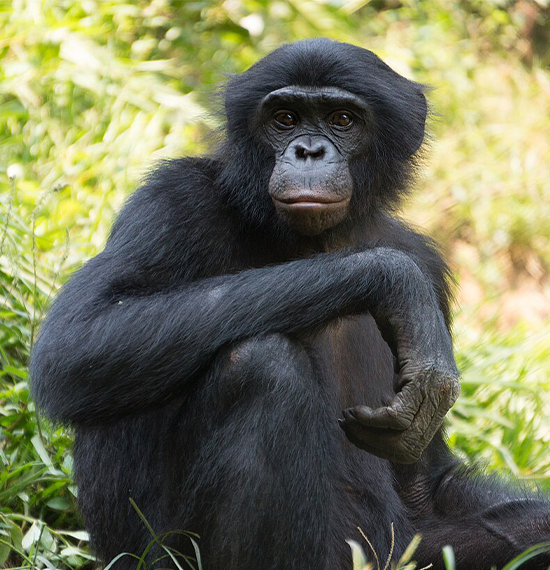
Bonobos are all about the hugs! These affectionate apes hold hands, embrace, and use cuddles to keep the peace—making them the perfect ambassadors for Valentine’s Day.
Bonobo
IUCN Status: Endangered (15,000-20,000 Est. 2016)
Scientific Name: Pan paniscus
Animal Type: Mammal, Primate, Great Ape
Diet: Omnivore
Lifespan in the wild: 20-50 years
Size: Up to 1.2 meters tall
Weight: Females 27-38 Kg, Males 36-61kg
Where do Bonobo's live?
Bonobos are so unique you can only find them in one place in the whole entire planet. They live in the Democratic Republic of Congo.
Bonobos evolved from the same common ancestor as chimpanzees.
For a long time, people thought bonobos were just a type of chimpanzee. But in 1929, scientists discovered they were actually a completely different animal!
Bonobos live south of the huge Congo River in Africa. Chimpanzees live north of the river.
What makes Bonobos special?
Bonobos are led by females. The female bonobos are in charge of the group!
They’re very caring and affectionate. When there’s an argument or tension, bonobos give each other hugs and cuddles instead of fighting.
Bonobos are really intelligent too. They work together as a team to solve problems and help each other out.
Threats Bonobos face
Sadly, bonobos are in danger. Some of the biggest problems they face are:
Hunting: Some people hunt bonobos for bushmeat (meat from wild animals).
Losing their homes: When people cut down trees for logging, the bonobos lose the forests where they live and find their food.
Disease :Bonobos can catch illnesses from humans and other animals, which can make them very sick.
Bonobos only live wild in one place – the Democratic Republic of Congo in Africa. But you can find them in zoos around the world.
However, zoos are unable to give great apes like bonobos everything they need. In the wild, bonobos live in large family groups, travel long distances through forests, and have complex social lives that are hard to recreate in captivity.